
Garland · Rowlett · Rockwall · Lake Ray Hubbard
Water Damage Restoration in Garland, TX
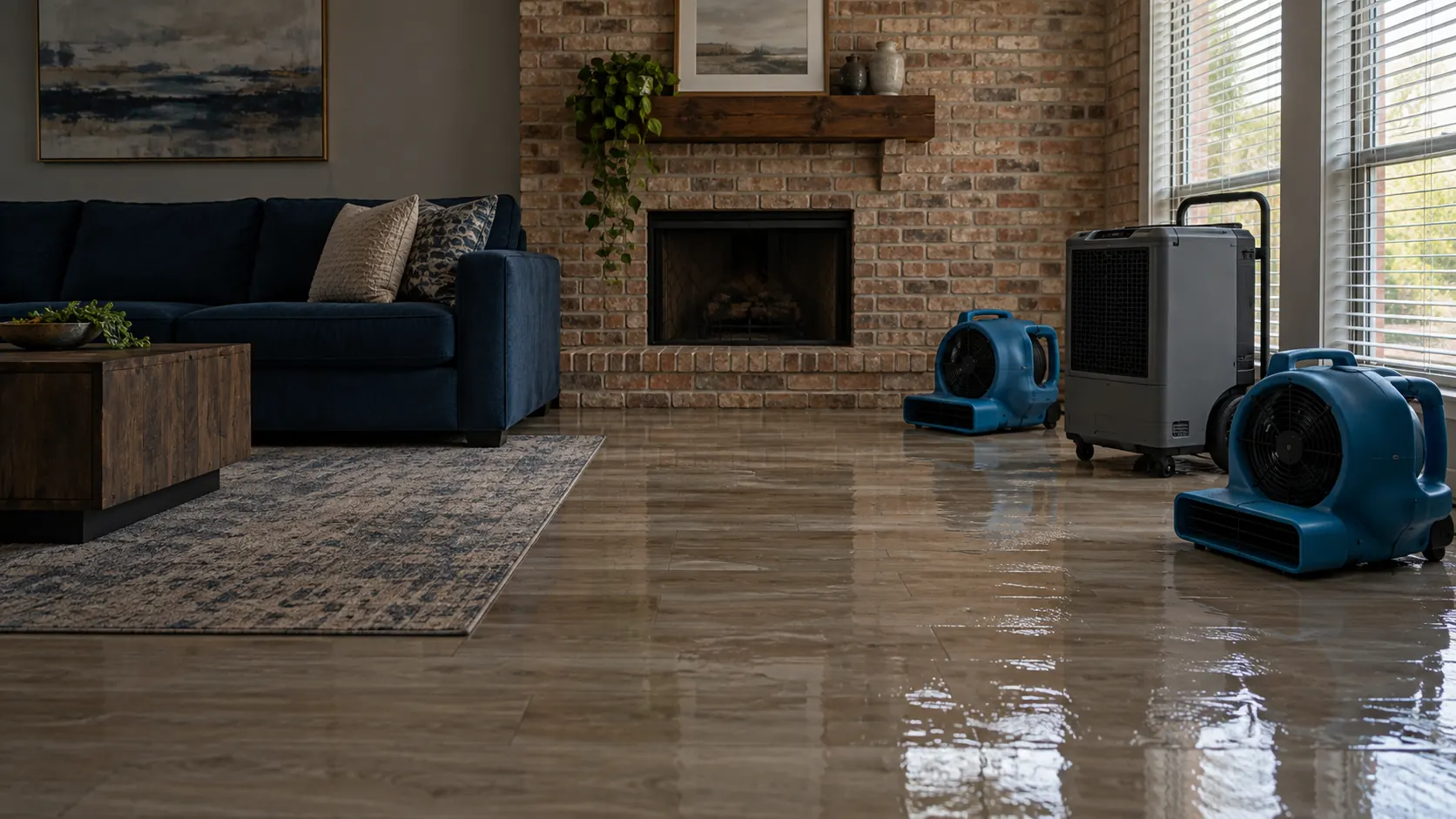
Water spreading after a leak or storm? Our local restoration professionals extract water, document wet materials and start a drying plan around Garland; call us any time.
- Describe the damage
- Insurance notes welcome
- Garland and nearby communities
Water Damage Restoration Services
Water can enter through plumbing, appliances, storms, roofs, or hidden leaks. Each source calls for a different inspection, extraction, drying, or cleanup plan.
 Emergency Water RemovalFor active leaks or standing water that may need pumping, extraction, inspection, and a controlled drying plan.
 Burst Pipe Water DamageFor broken, frozen, or leaking supply lines that leave walls, floors, cabinets, or belongings wet.
 Ceiling Water DamageFor ceiling stains, active drips, or sagging drywall where the source and safe drying plan still need to be assessed.
 Wall & Drywall Water DamageFor a wet wall, baseboard or wall cavity after a plumbing leak, flood or roof intrusion.
 Wet Carpet & FloorsGuidance for soaked carpet, pad, hardwood, laminate or flooring over a damp concrete slab.
 Slab Leak Water DamageWhen unexplained moisture or high water use suggests a possible leak beneath flooring or a slab.
Ray Hubbard Restoration helps homeowners in Garland and the cities around Lake Ray Hubbard when water gets where it shouldn't. Call and describe the water source and wet rooms. Your technician explains timing, scope and price before work starts.
A useful call covers four things: where the water came from, whether it is still coming in, which rooms and materials are wet, and whether it could be sewage or outside floodwater. Those answers decide whether the first visit is extraction, drying, contaminated-water cleanup or a plumber first. Keep photos and a short timeline for your insurer, which sets its own documentation rules. Before work starts, ask your technician what they will inspect and how they will show you the structure is dry.
The first steps after water damage guide has a short first-call checklist of what to mention about the source, the wet rooms and any safety concern.
What Happens Next
- Call and describe what you are seeing: the address, the water source, the rooms affected, and whether water is still flowing. If there is an electrical or structural hazard, move away and follow local emergency guidance.
- Give the exact address and water source so the wet-room inspection can be planned.
- One of our local restoration partners sets the visit time with you, inspects the wet rooms and explains the expected scope before work begins. Ask which items should be moved, photographed or left in place.
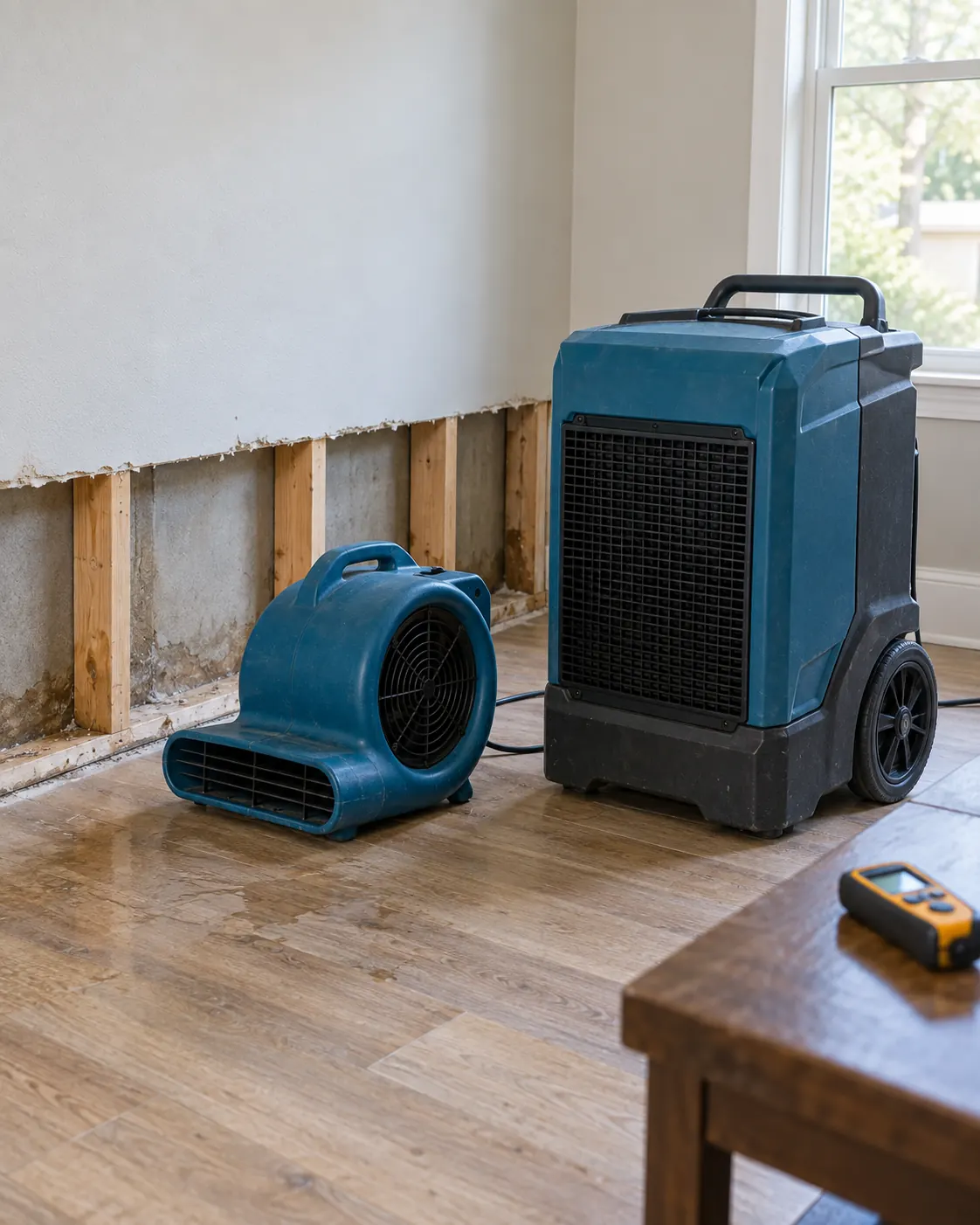
- Once you decide to go ahead, your technician sets up extraction and drying equipment, explains each step, and checks that the structure is dry before finishing.
Around Lake Ray Hubbard
Garland, Rowlett, Rockwall and Heath border Lake Ray Hubbard, but a street address is more useful than a lakeside label when water enters a home. A broken supply line, roof opening and outside floodwater call for different first steps. If water rose from outdoors, check the property on FEMA's Flood Map Service Center; proximity to the reservoir does not determine a mapped flood zone. The town pages give local water, sewer and drainage contacts where those change whom to call first. Give your technician the exact address, affected rooms and water source so they can plan the visit and what to bring.
Freezes, Storms and Slabs Around Garland
Three local patterns are worth knowing before you call.
Hard freezes and burst pipes
During the February 2021 winter storm, DFW Airport stayed at or below freezing for 139 straight hours, from February 13 to 19, and reached -2°F on February 16, according to the National Weather Service. NOAA notes that the freeze burst water pipes across Texas. Find the main shutoff before the next hard freeze; the burst pipe guide covers what happens after a line splits.
Storms that open the roof
On December 26, 2015, an EF4 tornado crossed Sunnyvale, Garland and Rowlett (NWS Fort Worth). Wind damage turns into water damage when rain gets through a damaged roof, window or wall, so the opening usually has to be covered before drying makes sense. See storm and flood damage.
Clay soil under concrete slabs
Garland lies in the Blackland Prairie, whose clay shrinks when dry and swells when wet. A leak under a slab can go unnoticed until flooring lifts or the water bill jumps; the slab leak guide explains why a plumber confirms it first.
Whatever the cause, EPA advises drying water-damaged areas and items within 24 to 48 hours to prevent mold growth.
Call and describe the water in your home, and your technician will walk you through the next step.
Call (972) 975-6997Questions people ask
Does living near Lake Ray Hubbard mean my home is in a flood zone?
Not by itself. Flood zones are mapped address by address on FEMA's Flood Map Service Center, and elevation and drainage change from street to street around the lake. Look up your exact address there. When you call about water damage, say whether the water rose from outside or came from a pipe, roof or appliance, because that changes both the cleanup and the insurance question.
Who do I call if water reaches outlets or the electrical panel in Garland?
Leave the room and do not touch the panel, switches or cords while anything around them is wet. The City of Garland says its own utility, Garland Power & Light, is the sole electric provider for about 85 percent of Garland, so confirm which company supplies your address. GP&L asks residents to call 911 and GP&L about downed lines. Restoration work starts after the electrical hazard is handled.
Is Ray Hubbard Restoration part of the City of Dallas?
No. Lake Ray Hubbard is a City of Dallas reservoir, and Ray Hubbard Restoration only uses the area's name. Call us about water damage around the lake; your technician goes over the visit time and the price with you before any work starts.
How will I know what the work will cost?
Your technician sets the price after learning the water source, the rooms and materials affected and the work needed, and should explain it before you authorize anything. Ask your technician for a written estimate, and compare it with the dated planning ranges in the cost guide.
Can I call about a home in Rowlett, Rockwall or Heath instead of Garland?
Yes. The service area includes cities on both sides of the lake. Give the exact street address rather than only the city, so your technician can find the house and bring the right equipment for the job; they will give you the visit time on that call.
What if water came in while the power was out?
Treat the wet rooms as if power could return at any moment. If you can reach the breakers for those rooms from a dry spot, switch them off; otherwise leave them for an electrician. Keep people away from outlets and cords in the water. Tell your technician whether the home has power, because extraction and drying equipment need a safe electrical supply.